

Introduction
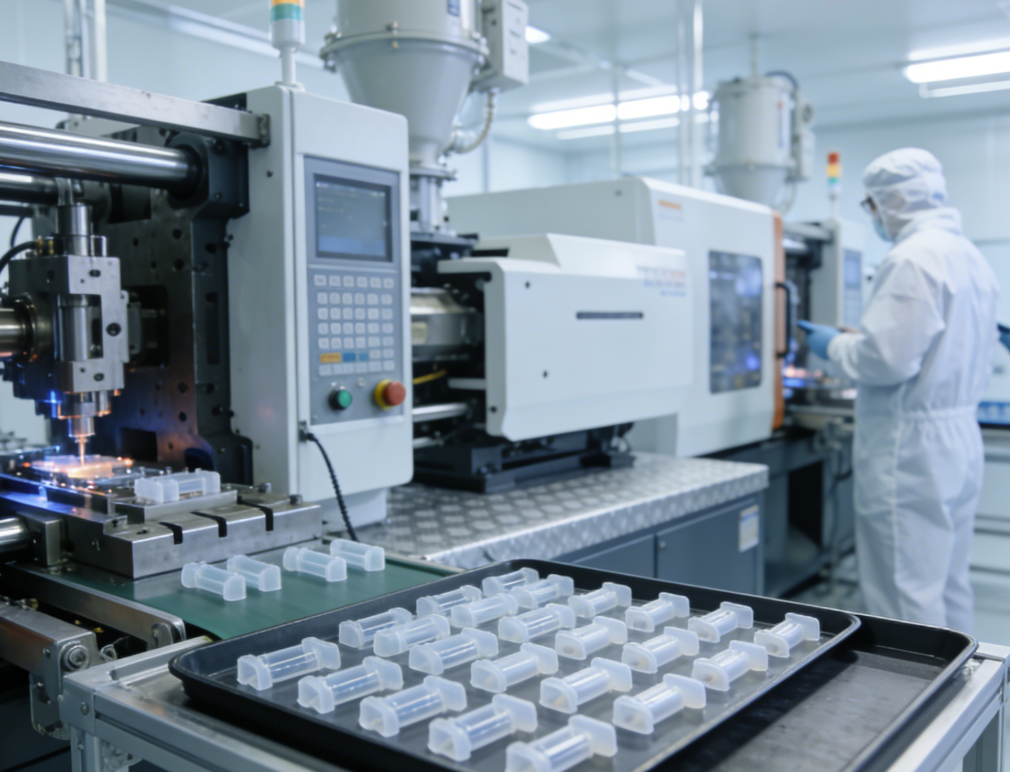
Precision injection molding has become a critical manufacturing technology for producing complex plastic components with tight tolerances and consistent quality. Compared with traditional manufacturing methods, Precision Injection molding enables manufacturers to produce high-volume parts with excellent dimensional accuracy and repeatability.
Many industries rely on precision injection molding to manufacture parts that require strict engineering standards, advanced materials, and efficient production processes.
This article explores the key industries that benefit the most from precision injection molding and explains why this technology has become essential for modern manufacturing.
Key Industries That Rely on Precision Injection Molding
1. Medical Device Manufacturing
The medical industry demands extremely high standards for safety, reliability, and dimensional precision. Even the smallest variation in part dimensions can affect the performance of medical devices.
Technologies such as Medical Injection Molding and Medical Device injection moulding are widely used to manufacture components for medical instruments, surgical devices, and diagnostic equipment.
Common medical applications include:
-
Surgical instrument components
-
Diagnostic device housings
-
Micro medical parts
-
Disposable medical products
For example, specialized molds like Diagnostic Device Housings Mold allow manufacturers to produce complex plastic housings used in laboratory equipment and medical testing devices.
Precision molding also supports advanced medical product development through rapid tooling technologies such as Rapid Tooling for Medical Devices.
2. Automotive Industry
The automotive sector is one of the largest users of injection molding technologies. Modern vehicles contain hundreds of plastic components used in both interior and exterior systems.
Manufacturers rely on Automotive injection molding to produce high-quality plastic parts that meet strict durability and safety requirements.
Typical automotive applications include:
-
Dashboard components
-
Interior trim parts
-
Electrical connector housings
-
Exterior plastic components
Advanced processes such as Multi-Material Injection Molding allow engineers to combine different materials within a single component, improving performance and reducing assembly steps.
Materials like ABS and polypropylene are commonly used, which is why specialized tooling such as Automotive ABS molding and Automotive polypropylene mold are widely adopted in the automotive industry.
3. Consumer Electronics Industry
Consumer electronics products require compact designs, precise structural components, and attractive surface finishes. Precision injection molding enables manufacturers to produce complex plastic housings and internal components with consistent quality.
Applications include:
-
Smartphone housings
-
Laptop components
-
Electronic connectors
-
Smart home devices
Manufacturers often use Consumer electronics molds and Precision mold for electronics to produce detailed plastic parts used in electronic products.
In early-stage product development, companies frequently adopt Rapid Tooling for electronics and Prototype Injection Molding to accelerate product design validation and reduce time to market.
4. Industrial Equipment and Automation
Industrial equipment manufacturers rely on injection molding to produce durable plastic components used in automation systems, robotics, and mechanical equipment.
Precision molded components help ensure stable performance and long service life in demanding industrial environments.
Processes such as Insert Molding are commonly used to combine metal inserts with plastic parts, creating strong hybrid components used in mechanical assemblies.
This technology is widely used in industrial automation systems, electrical equipment housings, and precision mechanical devices.
5. Aerospace and High-Precision Engineering
Although metals are commonly used in aerospace manufacturing, high-performance plastic components are also widely used due to their lightweight and corrosion-resistant properties.
Precision injection molding enables manufacturers to produce high-performance engineering plastic parts used in aerospace and advanced engineering systems.
These components often require tight tolerances and complex geometries that can only be achieved through advanced Precision Injection molding technologies combined with high-quality mold design.
Why Precision Injection Molding Is Essential for Modern Manufacturing
Across these industries, precision injection molding offers several major advantages:
-
High dimensional accuracy
-
Excellent repeatability in mass production
-
Reduced production costs for high-volume parts
-
Ability to produce complex geometries
-
Compatibility with multiple materials
By combining technologies such as Insert Molding, Prototype Injection Molding, and Multi-Material Injection Molding, manufacturers can develop innovative products while maintaining efficient production processes.
Conclusion
Precision injection molding plays a vital role in modern manufacturing across industries such as medical devices, automotive, consumer electronics, industrial automation, and aerospace engineering.
With the ability to produce complex components with tight tolerances and consistent quality, Precision Injection molding continues to drive innovation and efficiency in product manufacturing.
As product designs become more sophisticated and production requirements increase, precision injection molding will remain one of the most important manufacturing technologies for producing high-performance plastic components.