

Overcoming Key Challenges in Modern Injection Molding
Injection molding is one of the most widely used manufacturing processes for producing plastic components in industries such as automotive, medical devices, and electronics. It offers high production efficiency and the ability to manufacture complex parts at scale. However, many manufacturers face common challenges, including high tooling costs, long lead times, and production defects.
Understanding these pain points and implementing solutions like Precision Injection molding and rapid tooling is essential for maintaining a competitive edge.
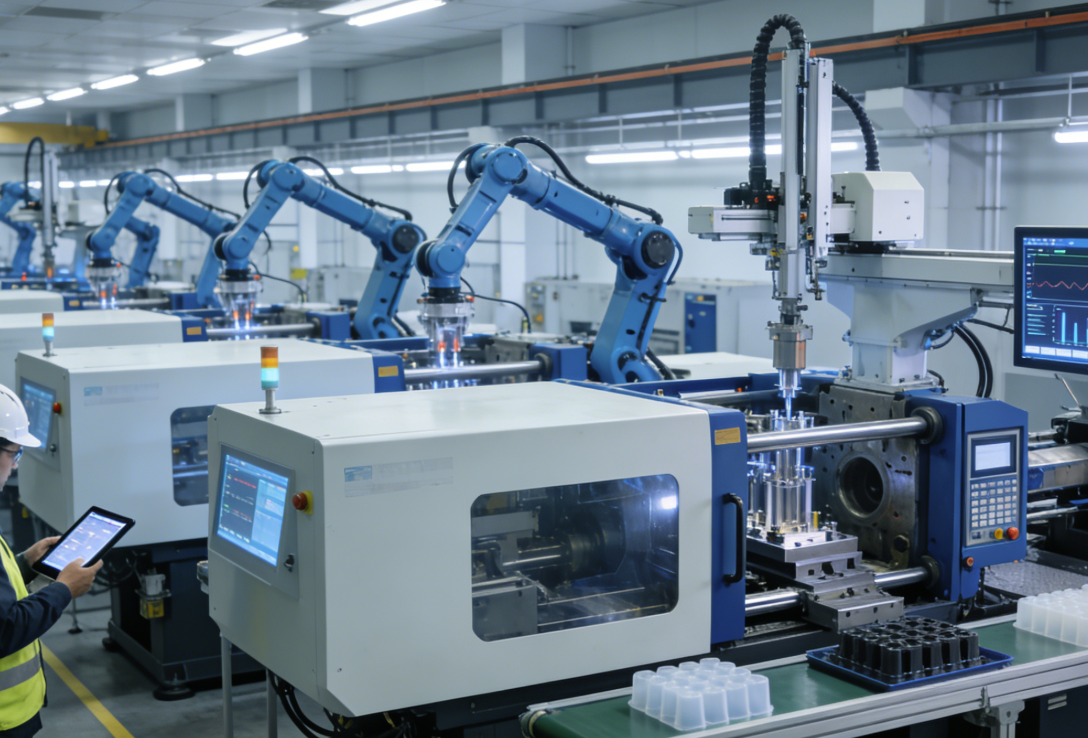
1. Reducing High Tooling Costs
One of the biggest hurdles is the initial investment in mold development. High-quality molds require skilled engineers and advanced equipment. For companies in the early stages of product development, an Aluminum mold prototyping service offers a cost-effective way to test designs before committing to expensive steel tools.
Furthermore, utilizing Custom CNC Machining to create mold inserts allows for greater flexibility and lower costs during the iterative design phase, ensuring that the final production tool is optimized for performance.
2. Solving Long Lead Times
Traditional mold production can take months, which is often too slow for the fast-paced electronics and medical sectors. To accelerate speed-to-market, many firms now rely on Rapid Prototyping Manufacturing. This approach, combined with Electronics Enclosure Prototype Molds, allows engineers to validate functional parts in days rather than weeks, moving the project into the mass production phase much faster.
3. Achieving Dimensional Accuracy and Tight Tolerances
Maintaining accuracy is critical; even a micron-level deviation can lead to assembly failure. Modern Tight tolerance injection molding technologies are designed specifically to meet these strict engineering requirements.
For products requiring complex integration, such as waterproof seals or reinforced housings, Insert Molding is often used to combine metal and plastic components into a single, high-precision part. This reduces assembly steps while improving the structural integrity of the final product.
4. Navigating Complex Part Designs
Modern designs often feature thin walls and intricate geometries that are difficult to mold. In the automotive sector, for example, there is a growing demand for Automotive Multi-material Components that combine soft-touch surfaces with rigid frames.
Successfully producing these parts requires Multi-Material Injection Molding capabilities, where two or more resins are injected into the same mold. This complexity demands a high-quality Precision mold for electronics or automotive applications to ensure that the interface between materials is seamless and durable.
5. Minimizing Production Defects
Defects like warping, sink marks, and flash can ruin a production run. Beyond optimized process parameters, the choice of molding technique is vital. For larger, thick-walled parts, Structural foam injection molding can be used to reduce internal stress and prevent warping, resulting in a more stable and lightweight component.
Conclusion
While injection molding presents challenges like high costs and technical complexity, they are not insurmountable. By adopting a strategy that includes Prototype Injection Molding for validation and high-precision tooling for production, manufacturers can ensure consistent quality. Partnering with a manufacturer that understands the synergy between CNC machining and advanced molding is the key to achieving long-term production efficiency.