

In the world of manufacturing, 5-axis CNC milling has evolved from a luxury reserved for aerospace giants to an essential tool for high-precision engineering. Unlike traditional 3-axis machines that move along X, Y, and Z planes, 5-axis machines rotate on two additional axes (A and B), allowing the cutting tool to approach a part from literally any direction. As we move through 2026, several key trends are redefining how we use this technology to create "zero-defect" components for the medical, automotive, and electronic sectors.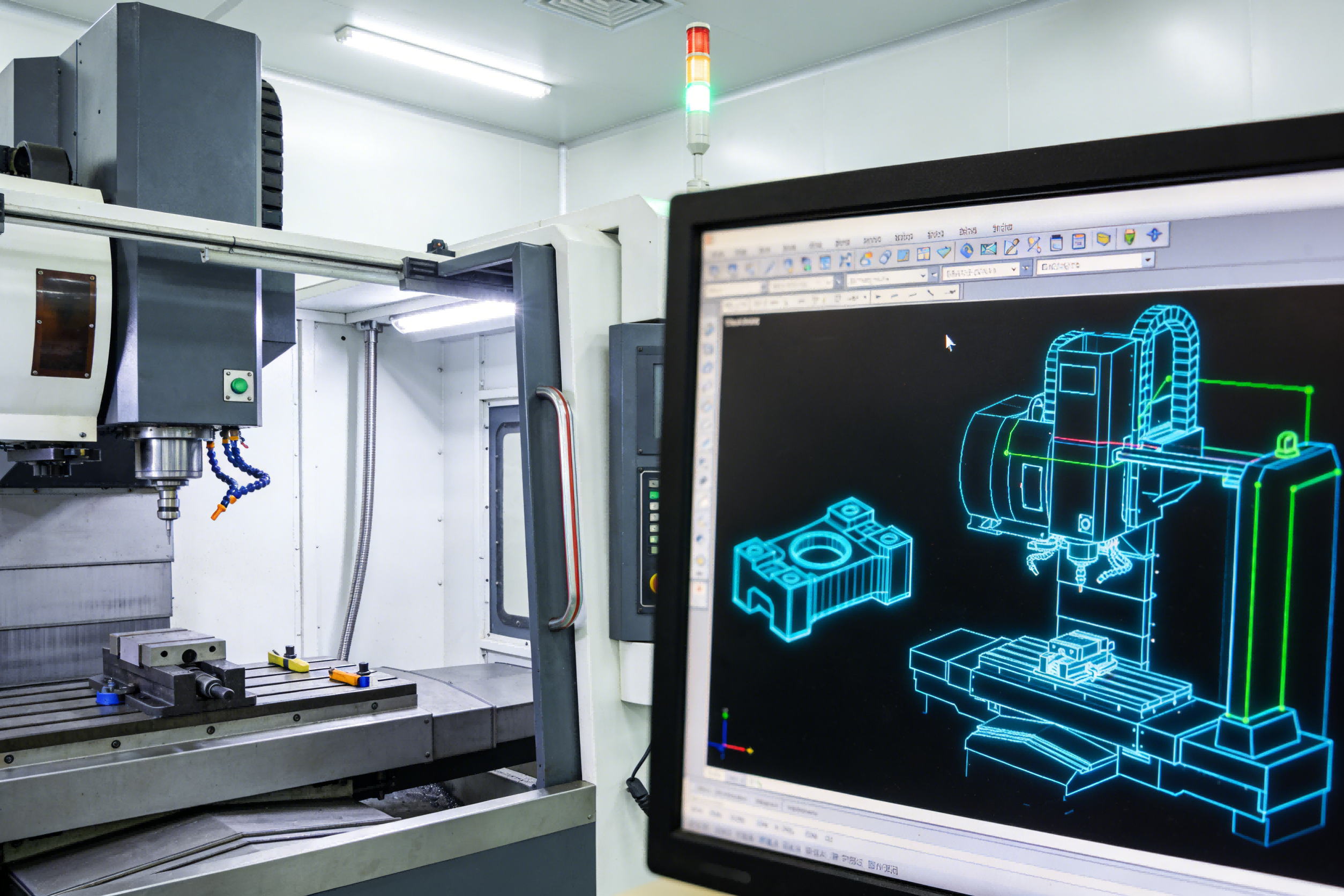
1. The Rise of "One-Setup" Manufacturing
The biggest trend in 5-axis machining is the shift toward "Done-In-One" processing. In the past, complex parts required multiple setups, moving the part from one machine to another, where each move introduced a risk of alignment error. Modern 5-axis precision CNC milling allows us to process five sides of a part in a single setup. This dramatically increases dimensional accuracy and reduces labor costs, ensuring that the final product perfectly matches the original CAD design.
2. Digital Twin and Advanced Simulation
Before the spindle even spins, the entire machining process is now born in a virtual world. With 5 axes moving simultaneously, the risk of the tool hitting the machine is high. Digital Twin technology creates a 100% accurate virtual replica of the machine and the part. This level of precision component CNC machining allows engineers to simulate the cutting path to find the most efficient route, reducing wear on expensive tools and shortening production time.
3. High-Speed Machining (HSM) for Complex Surfaces
For industries requiring micro medical CNC machining, such as those producing implants, surface finish is everything. New 5-axis centers are utilizing ultra-high spindle speeds combined with advanced software that maintains a "constant chip thickness." This creates "mirror-like" finishes directly off the machine, which is critical for complex aerospace component machining where aerodynamic or biocompatible surfaces must be flawless.
4. Integration of Automation and "Lights-Out" Manufacturing
Automation is no longer just for high-volume medical injection molding; it has arrived in the CNC world.
- Robotic Loading: 5-axis machines are increasingly paired with robotic arms that swap out raw materials and finished parts 24/7.
- Smart Monitoring: Sensors now track tool wear in real-time. This is particularly vital for industrial automation molding and machining components, ensuring "Zero-Defect" quality even during overnight shifts.
5. Hybrid Manufacturing: CNC Meets 3D Printing
A fascinating trend for 2026 is the Hybrid Approach. Manufacturers are using 3D printing to create a "near-net shape" and then using 5-axis complex part machining to finish critical surfaces to micron-level tolerances. This combines the geometric freedom of 3D printing with the unmatched precision of CNC. This approach is becoming a staple in rapid prototyping manufacturing, allowing companies to move from concept to functional metal or plastic parts faster than ever before.